Procrastinating Patreon: Solitary Company / Wanderers in the Dark

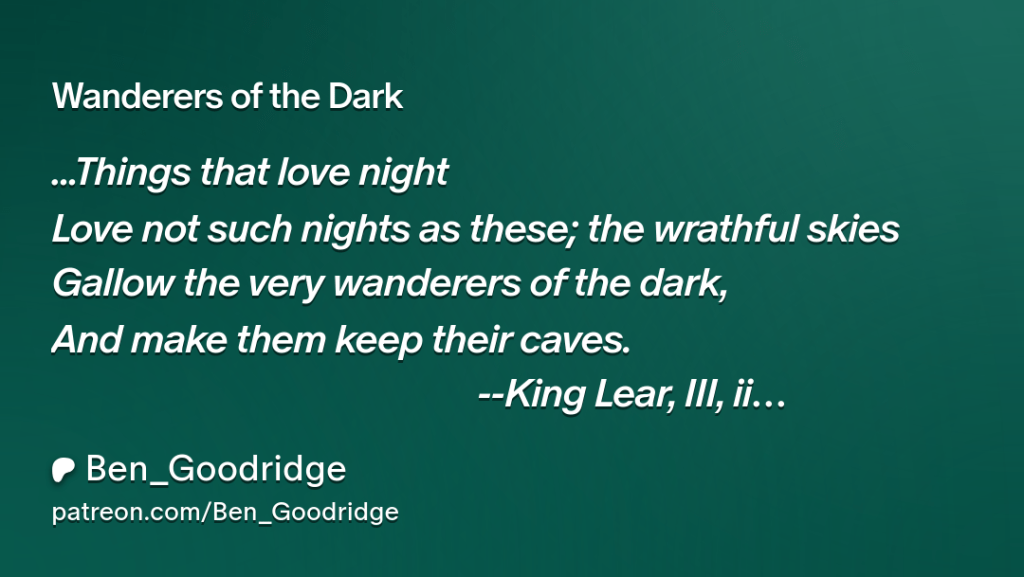
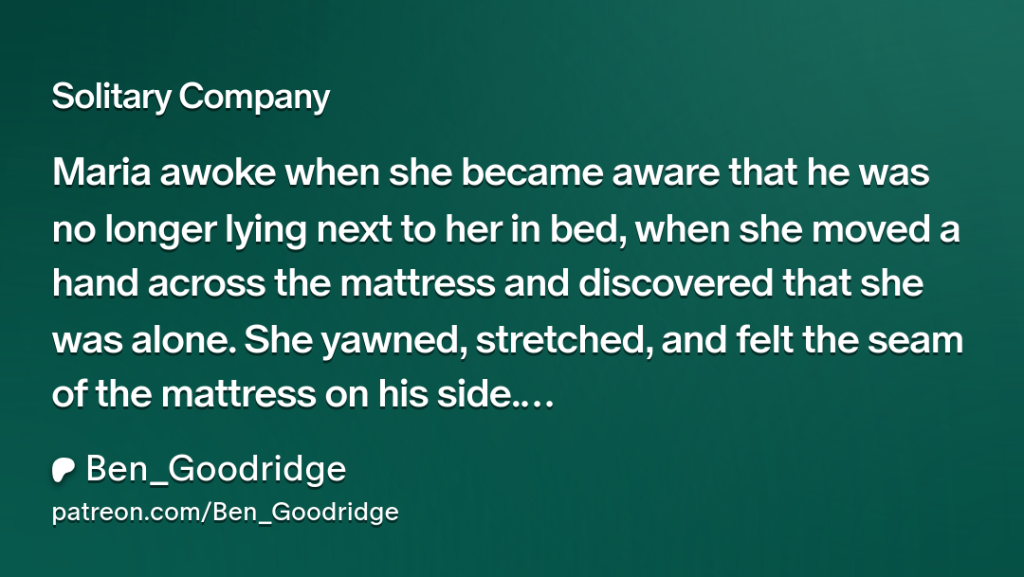
It’s interesting to rub these two stories together and see how werewolves have evolved over thirty years; “Solitary Company” would have been written in the early 1990s, while “Wanderers in the Dark” was written just a few years ago. Banning Deerblood is a heavyset, leather-wearing biker who owns a dive bar on a decrepit back road; Garrebor and Tarrock are ascetic scouts for a secluded tribe of New England werewolves. Banning is shy and timid, keeping his dual nature under his hat for discretion, while Garrebor and Tarrock are loud and fulsome about their circumstances.

But the one that caught my eye is that Banning Deerblood can shapeshift, and Garrebor and Tarrock cannot.

The elimination of shapeshifting was an odd turn for my writing to take. It’s pretty much what werewolves are famous for. In fact, a lot of my characters would have a much easier time of it if they could shapeshift. But in my current work, becoming a werewolf involves finding a Pack that will have you, and undergoing a grueling initiation and painful transformation. Nobody gets randomly bit during a hike in the gloaming. And the transformation is one-way. There’s no going back.

Protective Patreon: The Protectors / Judaism and the Art of Model-T Maintenance

When I went over “The Protectors” to decide if it was fit for Patreon, I was a little surprised at how old it was. It reads like a proto-“Tribe” story, with Chorou as an early version of Gabriel. The story is date-stamped 1996, but it could have been written any time in the last twenty years. I’m no longer a fan of characters talking like barbarian kings, but I wanted the werewolves in this story to be alienating to the human characters so they’d have to temper their unease. The two rivals clinking champagne glasses at the end is also something more likely to show up in a later story. Looking back, I’m surprised I never tried to get it published.

“Judaism and the Art of Model-T Maintenance” was written for a college writing class, probably in 1992. I learned a lot in college writing classes: I learned that they were an easy A, I learned that I’d never get an honest critique in them, and I learned that writing professors eat up this sort of derivative literary pretension with a spoon. I also learned that I’d much rather write genre fiction than literary fiction and that I do not write to order well. I did write some good stories as homework, but that just wasn’t the path I wanted to take.

Past Patreon: Cave of the Bear Clan / In the Cave

“In the Cave” was written as a college assignment in the early 1990s. To be honest (rub back of neck, nervous glance about the room) I didn’t get much out of college writing classes. I never received anything but the most ebullient praise in them, which is nice, but one doesn’t learn much from it. I would have been better served with lessons in an absorbing opening, rising action, building suspense, characterization, and a memorable climax. Instead, it was a circle of a dozen students reading their prose and clapping each other on the back for their genius. The professor might as well have gone out for coffee.

Later, I rewrote “In the Cave” into “Cave of the Bear Clan.” There’s not much resemblance between the two stories, and I bet you can guess which one has bear-people in it. They’re both about troubled college students exploring a cave and discovering how the past and present can redeem each other.

I don’t know much about spelunking myself, as I’ve seen enough YouTube videos to horrify me out of ever visiting any cave that doesn’t have a tour guide and a gift shop. (Seriously, what are you people doing?) So the caves in these stories are big and roomy and atmospheric instead of the tight little cracks in the rock that seem to attract every claustrophile with a selfie stick looking for a granite hug. Honesty, props to the mission, but it’s not for me.

Personable Patreon: Wet / This Thing that I’ve Become

I think I wrote “Wet” in 2014, when the idea of being able to escape the pressures of American life by turning into a fish and swimming away would have had a certain appeal. I was wondering whether this story had some Jonathan Livingston Seagull influence when I re-read it. It’s specifically set in Scarborough Marsh, a tidal saltwater wildlife preserve in Maine.

There’s no paywall on “This Thing that I’ve Become,” a Kilimanjaro Rising story written around 1993 or 1994. I don’t know whether its guilt-ridden protagonist chose to become a werewolf or whether it was something that just happened, but dealing with the reality of it has complicated his life, and now he’s on the run. This would have been a very different story if I’d written it thirty years later, but I like its isolated intimacy.

Perceptive Patreon: Citywolf / In the Soup

Two Patreon stories again this week, and one of them has no paywall.

I first wrote “Citywolf” in 1993. The Citywolf is probably my most unreliable narrator and is certainly my most delusional, convincing himself that a simple trip to the library to drop off some books is an adventure only he can see through a wasteland only he can accept. However, a lot happens on this simple trip to the library – more than might happen if he was truly delusional…

I wrote “In the Soup” a couple of months ago. I started thinking about the old and frankly racist trope of the two explorers sitting in the cookpot surrounded by cannibals waiting for dinner, a trope made famous in Warner Bros. cartoons, New Yorker pages, and Mad Magazine articles. My brain started begging for a subversion. The result was this story of two human explorers, one experienced and one naive, finding themselves in a similar position, with one explorer completely misinterpreting the situation.

Prehistoric Patreon – Sure as Kilimanjaro Rises

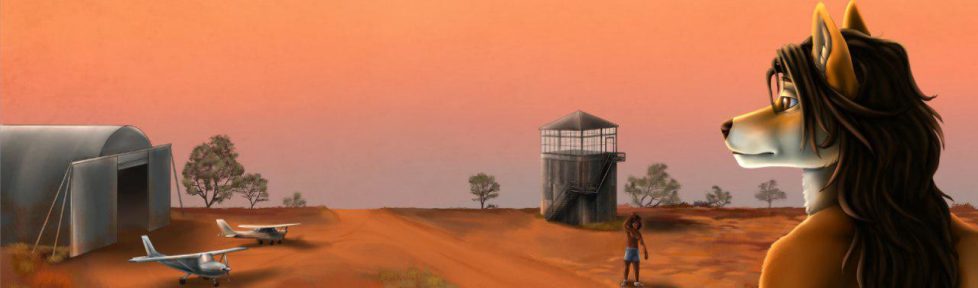
This was the first werewolf story I ever wrote.

I spent a lot of the summer of 1992 in the woods out back; sometime in August I wrote this story about nature as escape. The story went through extensive rewrites to be Patreon-ready; the original was full of speculative monologues and inside baseball, and I felt it would be poorly understood. It was one of the easiest rewrites I’ve ever done.

The title comes from Toto’s “Africa,” one of my favorite songs. My favorite interpretation of the song is that it’s about yearning for a place you’ve never been. The deuteragonist of this story is someone who can’t understand why he’s obsessing over a co-worker; the antagonist is someone who’s pretty much given up.

I wrote a number of stories with the same theme throughout the 1990s and gathered them under the group title “Kilimanjaro Rising.” I’ve been leafing through some of them. Maybe I can show them off soon.