Procrastinating Patreon: Solitary Company / Wanderers in the Dark

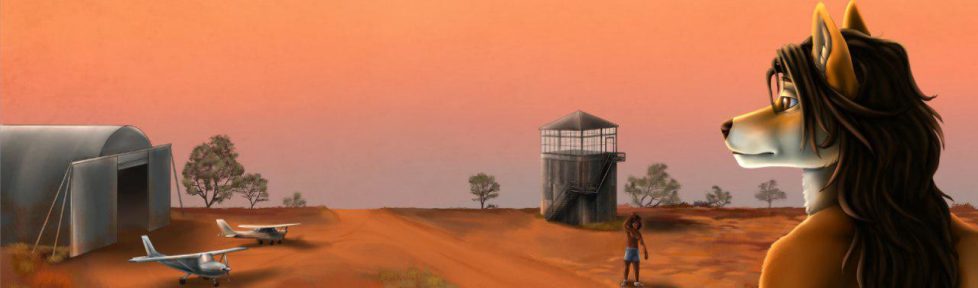
It’s interesting to rub these two stories together and see how werewolves have evolved over thirty years; “Solitary Company” would have been written in the early 1990s, while “Wanderers in the Dark” was written just a few years ago. Banning Deerblood is a heavyset, leather-wearing biker who owns a dive bar on a decrepit back road; Garrebor and Tarrock are ascetic scouts for a secluded tribe of New England werewolves. Banning is shy and timid, keeping his dual nature under his hat for discretion, while Garrebor and Tarrock are loud and fulsome about their circumstances.

But the one that caught my eye is that Banning Deerblood can shapeshift, and Garrebor and Tarrock cannot.

The elimination of shapeshifting was an odd turn for my writing to take. It’s pretty much what werewolves are famous for. In fact, a lot of my characters would have a much easier time of it if they could shapeshift. But in my current work, becoming a werewolf involves finding a Pack that will have you, and undergoing a grueling initiation and painful transformation. Nobody gets randomly bit during a hike in the gloaming. And the transformation is one-way. There’s no going back.
Payoff Patreon: Junkyard Dog, Part Two

A while ago I was asked to split a story into two parts for an anthology series. I was a little stumped by the request; the story wasn’t terribly long and I wasn’t sure how to build suspense for a cliffhanger in the middle of it, just when everyone was getting comfortable. Somehow I managed it, and the story was accepted.

For these longer works, I’m looking for a happy medium between just dropping the axe in the middle of a word and having to concoct suspense in an inappropriate scene, just to cleave to the 4,000-6,000 word-per-week rule. Clearly, some of these efforts are going to be a challenge, and “Junkyard Dog” was long enough that it had to be divided very carefully, meaning it leans more toward dropping the axe. At least I had a reveal at the end of the first part. Maybe with practice…

Protective Patreon: The Protectors / Judaism and the Art of Model-T Maintenance

When I went over “The Protectors” to decide if it was fit for Patreon, I was a little surprised at how old it was. It reads like a proto-“Tribe” story, with Chorou as an early version of Gabriel. The story is date-stamped 1996, but it could have been written any time in the last twenty years. I’m no longer a fan of characters talking like barbarian kings, but I wanted the werewolves in this story to be alienating to the human characters so they’d have to temper their unease. The two rivals clinking champagne glasses at the end is also something more likely to show up in a later story. Looking back, I’m surprised I never tried to get it published.

“Judaism and the Art of Model-T Maintenance” was written for a college writing class, probably in 1992. I learned a lot in college writing classes: I learned that they were an easy A, I learned that I’d never get an honest critique in them, and I learned that writing professors eat up this sort of derivative literary pretension with a spoon. I also learned that I’d much rather write genre fiction than literary fiction and that I do not write to order well. I did write some good stories as homework, but that just wasn’t the path I wanted to take.

Peculiar Patreon: Swirlie / Monster’s Buffet

I don’t really have an explanation for “Swirlie.” I don’t remember exactly when it was written, but it was long before the “anything for attention” social media days, where people gleefully light themselves on fire for clicks. I did see one disturbing little TikTok recently in which some kid proudly drank out of the toilet, so I guess the possibility of “Swirlie” was always there, even if the medium wasn’t.

“Monster’s Buffet” is one of the “Licensed Beasts” stories. The Tribe also uses licenses in some cases. Werewolves are allowed to move unrestricted among humans as long as they’re licensed; there’s a fee and a written test, and the license has to be renewed every five years. And if a human accuses a werewolf of threats or violence, it can be revoked. It’s a terrible form of oppression, but it’s also not taken seriously. Some towns are strict about licenses, others don’t bother to check. Public places decide more or less on an individual basis to enforce licensing, and judges may be strict or lenient on whether those licenses are revoked.

What it does create is a wonderful incentive for werewolf-hating humans to pick fights, knowing that werewolves can’t even show their teeth without risking everything. An unlicensed werewolf basically has no rights; if they’re lucky, they’ll just be handed over to their own Pack and told to stay out of town. If they’re unlucky…well…they’d better hope they’re lucky.

Predatory Patreon: Predator

Werewolves can’t kill humans. That’s not to say it doesn’t happen once in a while, usually by accident or in self-defense, but it does open an interesting question: what to do when a human hunts a werewolf.

Werewolf pelts are a much-sought symbol of masculinity among certain groups of people. Pretty sure Matt Walsh has one up on his wall in this world. It’s illegal, but the law is inconsistent on the subject and inconsistently enforced. And werewolves can’t kill humans – so, unwilling to turn a murderous human over to the authorities, and unable to punish them appropriately themselves, what does a werewolf do with a werewolf-hunter?

Political Patreon: You Can’t Win The Mall

There’s two sides to every story, and while it might seem a little odd to come down on the side of the corporate suit in a tale about community activism, it’s just as important to meet people where they are. Time and experience have shown the flaws in Duman’s protest technique.

The version of this story that I included in “Six-Pack” had a much flakier Duman and a much more harassed Esterbrook. Had I written this 2014 story either ten years earlier or ten years later, Esterbrook and Duman would have skipped off into the forest arm-in-arm, either through a vindication of youthful perceived moral superiority or a middle-aged daydream desire to flee the grind.

Personable Patreon: Wet / This Thing that I’ve Become

I think I wrote “Wet” in 2014, when the idea of being able to escape the pressures of American life by turning into a fish and swimming away would have had a certain appeal. I was wondering whether this story had some Jonathan Livingston Seagull influence when I re-read it. It’s specifically set in Scarborough Marsh, a tidal saltwater wildlife preserve in Maine.

There’s no paywall on “This Thing that I’ve Become,” a Kilimanjaro Rising story written around 1993 or 1994. I don’t know whether its guilt-ridden protagonist chose to become a werewolf or whether it was something that just happened, but dealing with the reality of it has complicated his life, and now he’s on the run. This would have been a very different story if I’d written it thirty years later, but I like its isolated intimacy.

Prehistoric Patreon – Sure as Kilimanjaro Rises

This was the first werewolf story I ever wrote.

I spent a lot of the summer of 1992 in the woods out back; sometime in August I wrote this story about nature as escape. The story went through extensive rewrites to be Patreon-ready; the original was full of speculative monologues and inside baseball, and I felt it would be poorly understood. It was one of the easiest rewrites I’ve ever done.

The title comes from Toto’s “Africa,” one of my favorite songs. My favorite interpretation of the song is that it’s about yearning for a place you’ve never been. The deuteragonist of this story is someone who can’t understand why he’s obsessing over a co-worker; the antagonist is someone who’s pretty much given up.

I wrote a number of stories with the same theme throughout the 1990s and gathered them under the group title “Kilimanjaro Rising.” I’ve been leafing through some of them. Maybe I can show them off soon.

Hostile Patreon: Swamp Monster

I have a few stories about people who desperately want to be werewolves, but are unwilling to put in the legwork. For these wannabes, there are always unscrupulous shamans willing to take shortcuts for a quick buck, but a werewolf needs guidance before and after transformation to deal with the sensory inrush and explosion of hormones and new strength and speed. For the first several weeks, a new werewolf is susceptible to mood swings capable of doing a lot of damage, both to himself and to others.

Clive used to specialize in edge cases. Now he enjoys a peaceful retirement in the Louisiana bayou. But every once in a while a moron shows up at the door.

This story is a companion piece to “Roadhouse Boys,” a novel about a werewolf’s journey from neophyte to mentor. It hasn’t been published yet, but the overall theme is: These boys play rough.

Playful Patreon: Hot Dog / Fair

Two more stories this week, both from 2014. In “Hot Dog,” werewolves move to Central Park; in “Fair,” they’re running a dunk tank at a county carnival. In both stories, they pass themselves off as benign innocents, the better to get closer to humans and learn more about them.

With “Werewolves on a Waterslide,” that’s three stories now about werewolves making themselves “safe” to get closer to humans, but in these two stories, they’re doing it to fulfill an agenda. A common theme in my werewolf stories is that the monsters mean no harm to humans, but it’s getting hard to hide. Sooner or later, they have to interact, and the monsters would rather that interaction be peaceful.

“Hot Dog,” “The Long Black Ride, “and “To Market” all appeared in the anthology “Six-Pack.